

Your building's paint job is like that friend who always looks put-together, until one day you notice their shirt is wrinkled, their shoes are scuffed, and you wonder how long they've been walking around like that. The same thing happens with commercial buildings here in Metro Detroit and Southeast Michigan. One day your property looks sharp, and the next thing you know, you're dealing with peeling paint and faded colors that make your business look like it's been through a Michigan winter (or five).
As property managers and business owners, we often get so busy with day-to-day operations that we miss the subtle signs our buildings are crying out for attention. That being the case, let's walk through the telltale indicators that it's time to call in the professionals for a fresh coat of paint, because trust us, your building is probably trying to tell you something.
1. The Great Color Fade: When Your Building Loses Its Personality
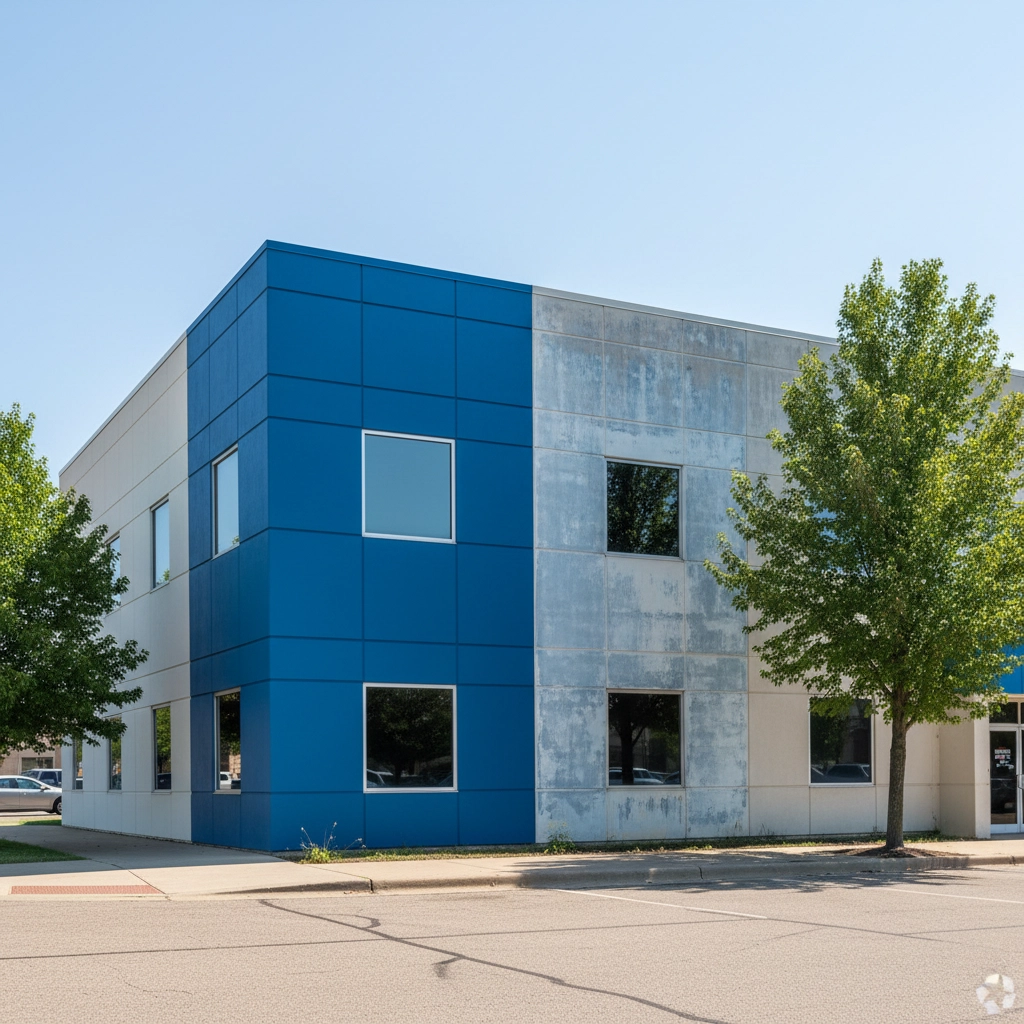
You know that feeling when you pull your favorite shirt out of the dryer and realize it's not quite the vibrant color it used to be? Well, your building experiences the same thing, except instead of one wash cycle, it's been battling Michigan's harsh UV rays, temperature swings, and weather extremes for years.
Color fading is often the first sign that your paint is losing its protective properties (and let's be honest, its good looks too). Those south and west-facing walls of your commercial property take the biggest beating from our intense summer sun, while the north and east sides might fade more gradually. If you're walking up to your building and thinking, "Wasn't this a deeper shade of blue?" then you've got your answer.
The thing is, fading isn't just cosmetic: though that's certainly part of it. When paint fades, the UV-protective pigments are breaking down, which means the underlying surface is becoming more vulnerable to damage. It's like sunscreen wearing off; eventually, you're going to get burned.
2. The Telltale Peeling, Cracking, and Bubbling Drama
Here's where things get interesting (and by interesting, we mean expensive if you wait too long). Peeling, cracking, and bubbling paint are your building's way of waving a white flag. These issues typically start small: maybe just a tiny crack here, a small bubble there: but they multiply faster than rabbits in spring.
Cracking often begins as hairline fractures that you might dismiss as "no big deal." But here in Southeast Michigan, we know what freeze-thaw cycles can do. Water gets into those tiny cracks, freezes, expands, and suddenly your minor crack becomes a major problem. Before you know it, chunks of paint are peeling off like old wallpaper, and you're looking at potential wood rot or metal corrosion underneath.
Bubbling paint is particularly concerning because it indicates moisture has gotten behind the paint film. This moisture didn't just wander in: it found a way through your building's defenses, and now it's having a party under your paint. Of course, moisture plus time equals bigger problems, so addressing bubbling paint quickly is crucial for protecting your investment.
3. The Chalky Handshake: When Your Building Leaves Its Mark

Have you ever run your hand along your building's exterior and come away with a powdery residue on your palm? That's chalking, and it's essentially your paint saying, "I'm tired and ready to retire." This chalky powder forms when the paint's binder breaks down over time, leaving pigment particles sitting loosely on the surface.
While chalking might seem like a minor cosmetic issue, it's actually a sign that your paint has lost its ability to protect the underlying surface effectively. Plus, let's think about the impression this makes on clients and customers. Nobody wants to accidentally get chalky residue on their clothes when they brush against your building (though it does make for an awkward conversation starter).
4. Previous Patch Jobs Gone Wrong: The Polka Dot Effect
We've all seen it: that commercial building that looks like it's wearing a patchwork quilt instead of a cohesive paint scheme. Maybe there was water damage that required a quick touch-up, or perhaps someone tried to cover graffiti with whatever paint was handy. The result? A building that looks like it can't decide what color it wants to be.
These mismatched patches are more than just an eyesore (though they certainly are that). They're evidence that your building has been crying for help for a while, and previous attempts at quick fixes haven't addressed the underlying issues. Moreover, spot treatments rarely age at the same rate as the surrounding paint, creating an ongoing cycle of patch-upon-patch that never quite looks right.
5. Water Stains and Rust Streaks: The Silent Alarm Bells

Water stains and rust streaks on your building's exterior are like smoke detectors going off: they're telling you there's a problem that needs immediate attention. These stains often indicate moisture problems beneath the surface, and in our Michigan climate, moisture problems have a way of becoming structural problems if left unchecked.
Rust streaks, particularly around metal fixtures, gutters, and trim, suggest that water is getting where it shouldn't be. This moisture doesn't just cause cosmetic damage; it can lead to serious structural issues that cost far more to fix than a preventive paint job would have.
It should be noted that water stains often appear in patterns that can help you identify their source. Vertical streaks might indicate gutter problems, while horizontal stains could suggest flashing issues or problems with your building's weatherproofing.
6. The Unwelcome Guests: Mold, Mildew, and Other Biological Growth
Nobody wants to run a business that looks like it's growing its own ecosystem, but that's exactly what happens when paint fails to protect your building's surfaces adequately. Mold and mildew appear as dark, fuzzy spots that thrive in our humid Michigan summers, particularly in areas where moisture tends to collect.
These biological invaders aren't just unsightly: they can actually compromise your building's structural integrity over time. They also send a message to customers and clients that your business might not be as well-maintained as they'd prefer. After all, if you're not taking care of the outside of your building, what does that say about how you handle other aspects of your business?
7. The Maintenance Treadmill: When Repairs Become a Full-Time Job
Are you finding yourself calling for building repairs more frequently than you used to? If you're constantly dealing with touch-ups, minor fixes, and band-aid solutions, it might be time to step off the maintenance treadmill and invest in a comprehensive repainting project.
Think of it like this: if your car needed repairs every month, at some point you'd probably consider buying a new one. The same principle applies to building maintenance. When you're throwing good money after bad with frequent touch-ups and repairs, a full repaint often makes more financial sense in the long run.
8. Time's Up: The Calendar Doesn't Lie

Sometimes the most reliable indicator that your building needs repainting is simply the calendar. Different materials have different lifespans, and here in Michigan, our weather extremes can accelerate the aging process.
Generally speaking, wood surfaces should be repainted every 3 to 7 years, aluminum siding every 5 years, and stucco every 5 to 6 years. Of course, these timelines can vary based on factors like sun exposure, weather conditions, and the quality of the previous paint job, but they provide a good baseline for planning.
The Business Case for Early Action
Here's the thing about commercial painting: it's not just about making your building look good (though that's certainly important). It's about protecting your investment and maintaining your professional image. That restaurant down the street with peeling paint might have amazing food, but how many potential customers drive past without stopping because the exterior suggests the business isn't well-maintained?
Early repainting is like preventive healthcare for your building. Address the signs early, and you'll avoid more expensive structural repairs later. Wait too long, and you might find yourself dealing with wood rot, metal corrosion, or other issues that require extensive preparation work before painting can even begin.
Your Building Inspection Checklist
To help you stay on top of your building's condition, we recommend doing a visual inspection at least twice a year: ideally in spring and fall. Look for:
- Color fading, especially on sun-exposed walls
- Any cracking, peeling, or bubbling paint
- Chalky residue when you touch the surface
- Water stains or rust streaks
- Areas of previous touch-up work that no longer match
- Signs of mold, mildew, or biological growth
- Overall wear patterns and high-traffic damage
Ready for a Fresh Start?
If you've spotted any of these signs on your Metro Detroit or Southeast Michigan commercial property, it's time to take action. At TD Painting and Wall Covering Inc, we understand the unique challenges our Michigan climate presents, and we're here to help protect your investment with professional commercial painting services.
Don't let your building's silent cries for help turn into expensive emergency repairs. Contact us today for a professional assessment and discover how a fresh coat of paint can transform your property and protect your business image for years to come.
